
Punishment and the Cycle of Violence
In Cold BloodThis thread follows the book’s debate over whether execution answers murder or repeats its logic through state power.
increasing Bearing strength in each event
 decreasing
Bearing strength in each eventdecreasingThe Demand for Retribution

The Demand for Retribution
Anger after the murders
Residents and officials respond to four deaths with a desire for punishment. Some explicitly imagine vengeance, while others fear that mercy would leave the public unprotected.
Justice under pressure
The community’s grief shapes the emotional climate in which the case will be tried. The need to condemn the crime can make the means of punishment seem self-evident.
A Case for Mercy
A Case for Mercy
Religious and legal appeals
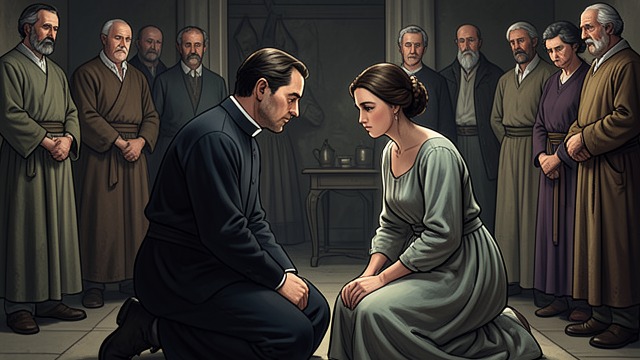
Relatives and clergy urge restraint, and defense counsel argue against state killing. Their claims do not deny the crime; they question whether execution can be a proper answer to it.
Compassion’s limits
Some witnesses can pity the condemned while remaining horrified by their actions. The difficulty is not choosing between innocence and guilt but deciding what guilt permits society to do.
The Prosecutor’s Counterargument
The Prosecutor’s Counterargument
Punishment as protection
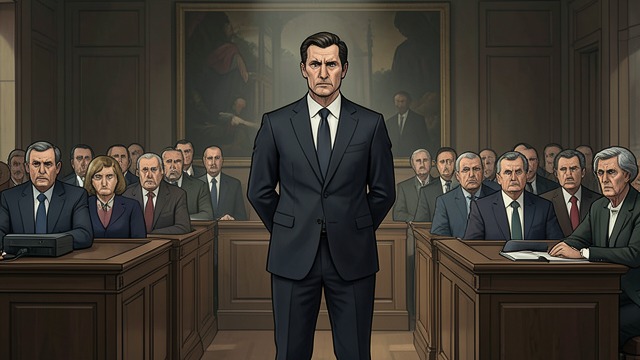
Logan Green argues that the maximum penalty is justified by the killings and the danger the defendants could pose if released. He invokes scripture and the value of the victims’ lives.
Public authority asserted
His argument presents execution as a lawful response rather than private revenge. Yet its emotional force draws on the same anger that the law claims to channel.
The Hanging of Andrews
The Hanging of Andrews
A witness from the Row
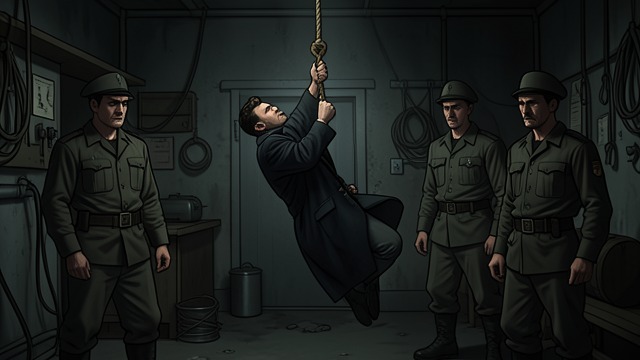
Lowell Lee Andrews is executed while Perry and Dick watch from their cells. The spectacle makes the state’s punishment concrete for men expecting the same fate.
Human cost observed
The ritual is not only a legal conclusion but a bodily event witnessed through sound and shadow. The scene foreshadows their later executions without making either response to murder simple.
A Killing by the State
A Killing by the State
Justice completed
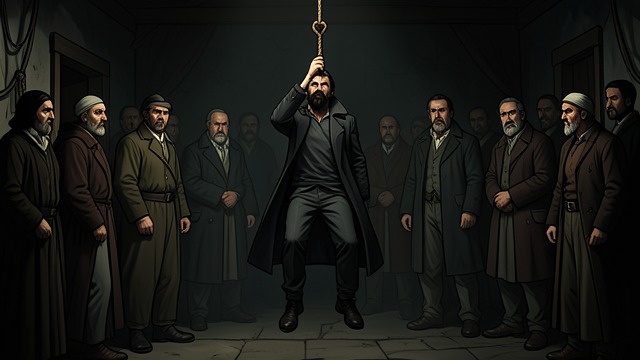
The executions fulfill the sentences and satisfy those who believe the men earned death. The law closes the case through a deliberate act of killing.
The argument remains
The ending invites comparison between the murderers’ violence and the state’s ritualized violence. It offers no easy equivalence, but it leaves the moral question unresolved.
November 1959
November 1959–March 1960
March 1960
November 30, 1962
April 14, 1965
